What Does a Psychiatrist Treat? Conditions and Nampa Care
Integrity Mental Health Editorial ·

Deciding who to call when your mind feels off is harder than it should be — and the first question most people ask is simple: what does a psychiatrist treat? The short version is that psychiatrists handle the medical side of mental health, from depression and anxiety to ADHD, bipolar disorder, and more serious conditions that need prescription care. This guide maps symptoms to the right kind of specialist and explains how psychiatric care works for families in Nampa, Idaho.
Quick Answer
A psychiatrist is a medical clinician — a physician (MD or DO) or a board-certified psychiatric nurse practitioner (PMHNP-BC) — who diagnoses and treats mental health conditions medically. What does a psychiatrist treat? Depression, anxiety disorders, ADHD, bipolar disorder, OCD, PTSD, schizophrenia, postpartum depression, alcohol use disorder, eating disorders, and behavioral symptoms tied to dementia. Unlike most therapists, psychiatric prescribers can order lab work and prescribe medication.
TL;DR
- Psychiatrists treat the medical side of mental health and can prescribe medication, while therapists treat through structured conversation. See what a psychiatrist actually is
- The condition list spans mood, anxiety, attention, psychotic, substance use, eating, and cognitive disorders. Read the full condition breakdown
- Many people work with both a prescriber and a therapist at the same time, especially for moderate to severe symptoms. Compare who treats which condition
- Symptoms that last more than two weeks, disrupt sleep or work, or stall out in therapy are common reasons to book an evaluation. Check the seven booking signals
- Nampa residents can see a prescriber locally in Canyon County or connect by telehealth from anywhere in Idaho. See how Nampa access works
In This Article
- What Is a Psychiatrist, Exactly?
- What Does a Psychiatrist Treat?
- Psychiatrist or Therapist: Who Treats What?
- When Should You See a Psychiatrist Instead of Waiting?
- How Does Psychiatric Care Work in Nampa, Idaho?
- What Should You Look for When Choosing a Psychiatrist in Nampa?
- What Happens After You Book Your First Appointment?
- Frequently Asked Questions
What Is a Psychiatrist, Exactly?
A psychiatrist is a clinician trained in medicine first and mental health second. Physicians complete medical school and then a multi-year residency focused on psychiatric diagnosis and treatment. Psychiatric nurse practitioners complete graduate nursing education plus a psychiatric mental health specialty and board certification.
Psychiatry is the branch of medicine that evaluates mental, emotional, and behavioral conditions as health conditions — with a history, an exam, sometimes lab work, and a treatment plan. That medical framing is what separates it from counseling.
Credential letters tell you what a clinician can do:
- MD or DO — a physician who completed psychiatric residency training.
- PMHNP-BC — a board-certified psychiatric mental health nurse practitioner who diagnoses and prescribes.
- LCSW, LPC, LMFT, PhD, PsyD — therapy-focused credentials. These clinicians provide counseling and testing rather than prescriptions.
Both prescriber types evaluate symptoms, make a diagnosis, discuss treatment options, and adjust the plan over time. In Idaho, both routinely provide psychiatry services in outpatient clinics and by video visit.

⚠️ Before you book, check the letters. A "mental health provider" listing may be a therapist, a prescriber, or both. If you specifically want medication evaluation, confirm the clinician is an MD, DO, or PMHNP-BC.
What Does a Psychiatrist Treat?
Psychiatrists treat conditions listed in the diagnostic manual clinicians use — the DSM-5-TR — whenever medical evaluation, medication, or ongoing monitoring may help. That covers far more than depression and anxiety. Mental health conditions are common across the United States, and most of the ones people experience fall somewhere in the groups below.
The scope breaks into five broad families:
- Mood disorders
- Anxiety-related disorders, including OCD and PTSD
- Attention and neurodevelopmental conditions
- Psychotic, substance use, and eating disorders
- Cognitive conditions and the behavioral symptoms that come with them
Mood Disorders: Depression, Bipolar, and Postpartum Depression
Psychiatrists treat major depressive disorder, persistent depressive disorder (a longer-running, lower-grade depression), bipolar I, bipolar II, and postpartum depression. These conditions often involve sleep, appetite, energy, and concentration — physical signals that benefit from a medical workup.
A prescriber will usually screen with a standardized questionnaire such as the PHQ-9, review your medical history, and ask about thyroid issues, sleep apnea, and medications that can mimic or worsen low mood.
Bipolar disorder deserves special mention. Because the depressive phase often arrives first, it can be mistaken for unipolar depression. Asking about past periods of unusually high energy, reduced need for sleep, or impulsive decisions is a standard part of a careful psychiatric evaluation.
Postpartum depression is also firmly psychiatric territory. New parents are frequently told that exhaustion explains everything, but persistent hopelessness, intrusive thoughts, or detachment from the baby warrant an evaluation rather than a wait-and-see approach.
Anxiety, OCD, and PTSD
Generalized anxiety disorder, panic disorder, social anxiety disorder, OCD, and PTSD are core psychiatric conditions. Each is defined by patterns clinicians can measure and track over time.
Common screening tools include the GAD-7 for general anxiety symptoms and the PCL-5 for PTSD. Scores do not replace a diagnosis, but they give you and your prescriber a shared baseline. You can complete free depression and anxiety self-assessments before your first visit and bring the results with you.
Psychiatric care for these conditions often runs alongside therapy. Exposure-based work and CBT are therapist territory; medication decisions, physical symptom review, and ruling out contributors like thyroid dysfunction or stimulant intake sit with the prescriber.
ADHD and Attention Concerns
Psychiatrists diagnose ADHD in both children and adults, and they manage the stimulant and non-stimulant medications used to treat it. Diagnosis is not a single test — it draws on a structured history, symptom scales, and evidence that difficulties began in childhood rather than appearing suddenly in adulthood.
Adults who were never evaluated as kids often arrive after years of missed deadlines, lost items, and the sense of working twice as hard for the same result. A prescriber will also check for the conditions that frequently travel with ADHD, including anxiety, depression, and sleep problems.

Psychotic, Substance Use, Eating, and Cognitive Disorders
Schizophrenia, schizoaffective disorder, alcohol use disorder, eating disorders, and the behavioral changes that accompany dementia are all treated within psychiatry. These conditions usually require medical oversight rather than counseling alone.
- Psychotic disorders — hallucinations, delusions, or disorganized thinking need prompt psychiatric evaluation.
- Alcohol and substance use disorders — medical assessment matters because withdrawal can be dangerous and co-occurring depression is common.
- Eating disorders — eating disorder treatment typically involves a team, with medical monitoring at the center.
- Cognitive conditions — dementia-related behavioral symptoms such as agitation, paranoia, or sleep reversal are frequently managed by a psychiatric prescriber alongside the primary care team.
Red flags that point toward a prescriber rather than therapy alone:
- Hearing or seeing things others do not
- Thoughts of self-harm or suicide
- Rapid, unexplained weight loss or restriction of food
- Days without meaningful sleep
- Withdrawal symptoms when cutting back on alcohol
- New confusion, personality change, or memory loss in an older adult
Key takeaway: If symptoms involve the body — sleep, appetite, weight, withdrawal, or perception — a medical evaluation should come early, not last.
Psychiatrist or Therapist: Who Treats What?
Therapists treat through structured talk-based methods such as CBT, DBT, and EMDR. Psychiatrists treat through diagnosis, medication, lab work, and ongoing medical monitoring. The dividing line is less about the condition name and more about severity, duration, and whether physical symptoms are involved.
Here is how that plays out condition by condition.
| Condition | Typically Starts With | Prescriber Needed? | Common Combined Approach |
|---|---|---|---|
| Mild, situational anxiety | Therapy | Often not initially | Therapy plus sleep and lifestyle changes |
| Moderate to severe depression | Either, often both | Frequently | Medication management plus weekly therapy |
| ADHD | Psychiatric evaluation | Usually | Medication plus skills coaching or therapy |
| Bipolar disorder | Psychiatric evaluation | Yes | Mood-stabilizing medication plus therapy |
| PTSD | Therapy, often with a prescriber | Sometimes | Trauma-focused therapy plus symptom-targeted medication |
| Schizophrenia | Psychiatric evaluation | Yes | Medication plus supportive services and family education |
Plenty of people see both clinicians at once, and that is a normal plan rather than a sign things are going badly. The therapist works on patterns, triggers, and coping skills. The prescriber works on the biology and tracks how you respond.
If you want the credential-level breakdown — training paths, testing, and who to call first — our guide to how psychiatrists and psychologists differ covers that in detail.
Key takeaway: Choose by symptom severity, not by label. Body-based symptoms and persistent impairment point toward a prescriber; skills, patterns, and processing point toward therapy.
When Should You See a Psychiatrist Instead of Waiting?
Book an evaluation when symptoms have lasted more than two weeks and are getting in the way of daily life. The diagnostic criteria clinicians use for a major depressive episode include a two-week duration threshold, which makes it a practical benchmark for the rest of us too.
Use this checklist. If you can tick two or more, an evaluation is reasonable:
- Low mood, worry, or irritability most days for two weeks or longer
- Sleep that has collapsed — too little, too much, or badly fragmented
- Appetite or weight changing without you trying
- Work, school, or parenting performance slipping
- Pulling away from people you normally enjoy
- Therapy that helped at first but has plateaued
- Using alcohol or substances to get through the day
You do not need to be in crisis to qualify for psychiatric care. Earlier evaluation simply gives you more options and a clearer baseline.
⚠️ If you are in crisis, do not wait for an appointment. Call or text 988 to reach the Suicide & Crisis Lifeline in the U.S., available 24/7. For a medical emergency, call 911 or go to the nearest emergency department.
Not sure where you land? Taking a standardized screener first gives you concrete language to bring to the visit, instead of trying to summarize months of difficulty in the first five minutes.
How Does Psychiatric Care Work in Nampa, Idaho?
Nampa residents generally have two routes: an in-person visit with a Canyon County clinician, or a telehealth appointment with an Idaho-licensed prescriber from home. Most practices follow the same shape — a longer diagnostic evaluation first, then shorter follow-ups on a set cadence while the plan is adjusted.
Access in the Treasure Valley has a few local realities worth knowing:
- Much of Idaho, including rural Canyon County areas, is federally designated as experiencing a shortage of mental health professionals, which can lengthen wait times.
- Many Nampa residents drive roughly half an hour toward Meridian, Eagle, or Boise for specialty psychiatric appointments.
- Telehealth has become the practical workaround, since Idaho-licensed prescribers can see patients statewide by secure video.

Telehealth also removes a few friction points that keep people from booking at all: time off work, childcare, winter driving, and the discomfort of sitting in a waiting room in a town where you might run into a neighbor.
For patients who prefer in-person visits, psychiatric care in Nampa is available through our Treasure Valley clinics, with virtual appointments offered for follow-ups when that is easier.
Key takeaway: In Nampa, the fastest route to a prescriber is often a hybrid one — an in-person evaluation when you want it, with video follow-ups to keep the plan on schedule.
What Should You Look for When Choosing a Psychiatrist in Nampa?
Judge a practice on five things: credentials, condition focus, insurance acceptance, wait time, and whether both in-person and virtual visits are available. A directory listing tells you an address; these criteria tell you whether the care will actually fit your life.
Care settings differ in meaningful ways:
| Setting | Typical Wait | Insurance | Continuity of Care | Best Fit For |
|---|---|---|---|---|
| Private psychiatric practice | Varies by clinic | Commercial plans, often Medicaid/Medicare | Usually the same prescriber each visit | Ongoing medication management |
| Community health center | Often longer | Sliding-scale options common | Varies with staffing | Lower-cost or uninsured care |
| Hospital-based program | Depends on acuity | Broad acceptance | Transitions back to outpatient | Higher-acuity or stabilization needs |
| Telehealth-only platform | Often shortest | Varies widely by plan | Depends on the platform model | Follow-ups and geographic flexibility |
Questions worth asking on the phone:
- Is the clinician an MD, DO, or PMHNP-BC?
- Do they routinely treat my condition — ADHD, bipolar disorder, postpartum depression?
- What is the wait for a new-patient evaluation versus a follow-up?
- Do you bill my plan? Check the list of insurance we accept before you book.
- Can follow-ups be virtual if driving becomes difficult?
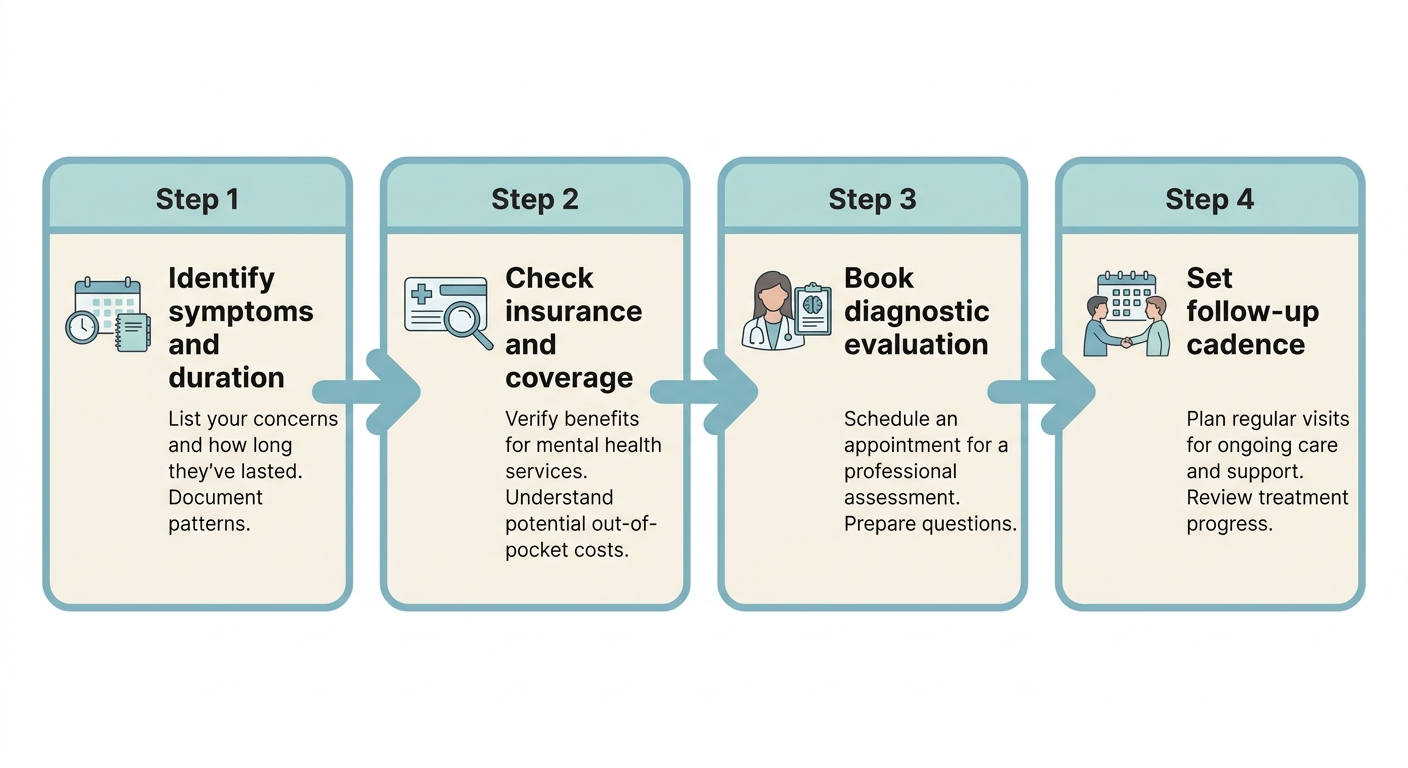
One more practical filter: ask how medication decisions are made. Some practices offer pharmacogenetic testing — a cheek swab that looks at how your body processes certain medications — as one input among several when a prescriber is weighing options.
What Happens After You Book Your First Appointment?
The first visit is a diagnostic evaluation, not a prescription pickup. Expect a longer appointment than a standard medical visit — often around an hour, though this varies by practice — covering symptom history, medical history, family history, medications, sleep, and substance use.
The typical arc looks like this:
- Intake paperwork — history forms and screening questionnaires completed before the visit
- Evaluation visit — the long conversation, plus any lab work the clinician orders
- Diagnosis and plan — what the symptoms appear to be and the options for treating them
- Early follow-ups — shorter check-ins, commonly every few weeks while a plan is adjusted
- Maintenance cadence — longer intervals once things are stable
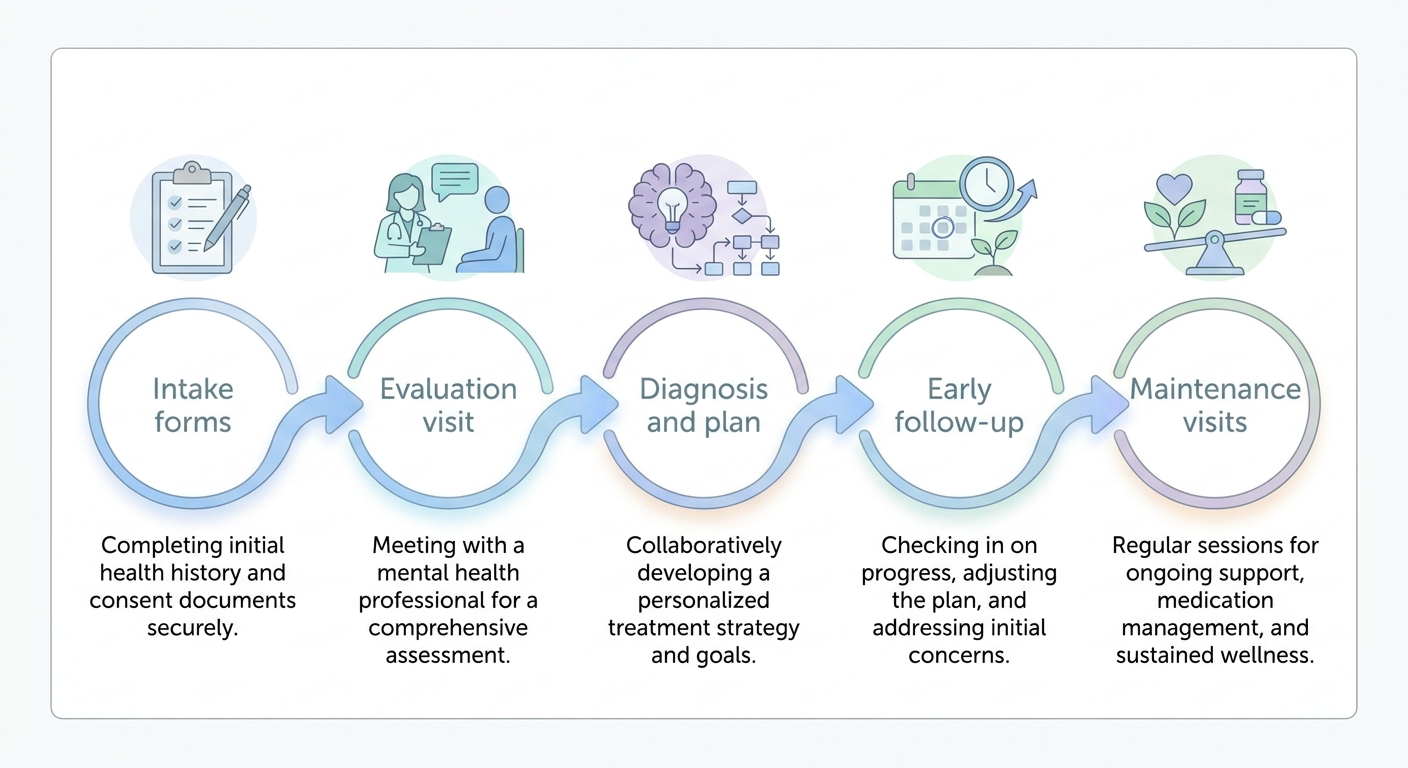
Plans get adjusted. Dose changes, medication switches, and added therapy referrals are routine parts of the process, and responses vary from person to person. The purpose of the follow-up cadence is exactly that — to check what is working and change what is not.
Frequently Asked Questions
Can a psychiatrist treat me without medication?
Yes. A psychiatric evaluation may conclude with a therapy referral, sleep and lifestyle recommendations, or a plan to monitor symptoms before deciding anything. Medication is one tool, not a requirement. If medication is on the table, some practices use pharmacogenetic testing as one additional input when discussing options with you.
Do I need a referral to see a psychiatrist in Idaho?
Most Idaho outpatient practices accept self-referrals, so you can call and book directly. Some insurance plans — certain HMOs in particular — still require a primary care referral for behavioral health coverage. Check your plan's behavioral health benefit before your first appointment so there are no billing surprises.
Does insurance cover psychiatric visits in Nampa?
Generally yes. Under the federal Mental Health Parity and Addiction Equity Act, most group health plans that cover mental health must do so on terms comparable to medical and surgical care. Coverage details still vary by plan, so confirm your copay, deductible, and network status directly with your insurer.
Can a psychiatrist treat both ADHD and anxiety at the same time?
Yes. Co-occurring conditions are common, and sorting out which to address first is a routine part of psychiatric care. A prescriber will look at which symptoms cause the most disruption, how the conditions interact, and how treatment for one may affect the other. Sequencing is discussed with you, not decided around you.
Summary
So, what does a psychiatrist treat? The medical side of mental health across mood, anxiety, attention, psychotic, substance use, eating, and cognitive conditions — anything that benefits from diagnosis, prescribing, or ongoing clinical monitoring. Therapists handle the skills and processing work, and many people benefit from both at once.
If you live in or near Nampa, Idaho, access comes down to two choices: an in-person visit in the Treasure Valley or a telehealth appointment from your kitchen table. Either way, the entry point is the same — a diagnostic evaluation with a prescriber who can tell you what you're actually dealing with. You can start by reviewing the psychiatric care in Nampa options and requesting a time that fits your schedule.